
How My Teaching Skills Translate to Corporate Learning
September 20, 2024
After over two years with a Top 10 Fortune 500 company, I’ve seen firsthand how former educators thrive across various roles within the corporate world. The reason is clear: the skills educators have honed are transferrable to the corporate world. These are just a few of the skills educators have that transfer to the corporate world:
– Needs analysis
– Impact data
– Conflict resolution
– Accessibility and compliance
– Inclusion and Diversity
– Project management
– Empathetic leadership
– Emergency preparedness
– Coaching
– Mentoring
– Learning and Development
– Learning theory
– Training Facilitation
– Content creation
– Assessment writing
– Hands-on activities
– Technology for engagement
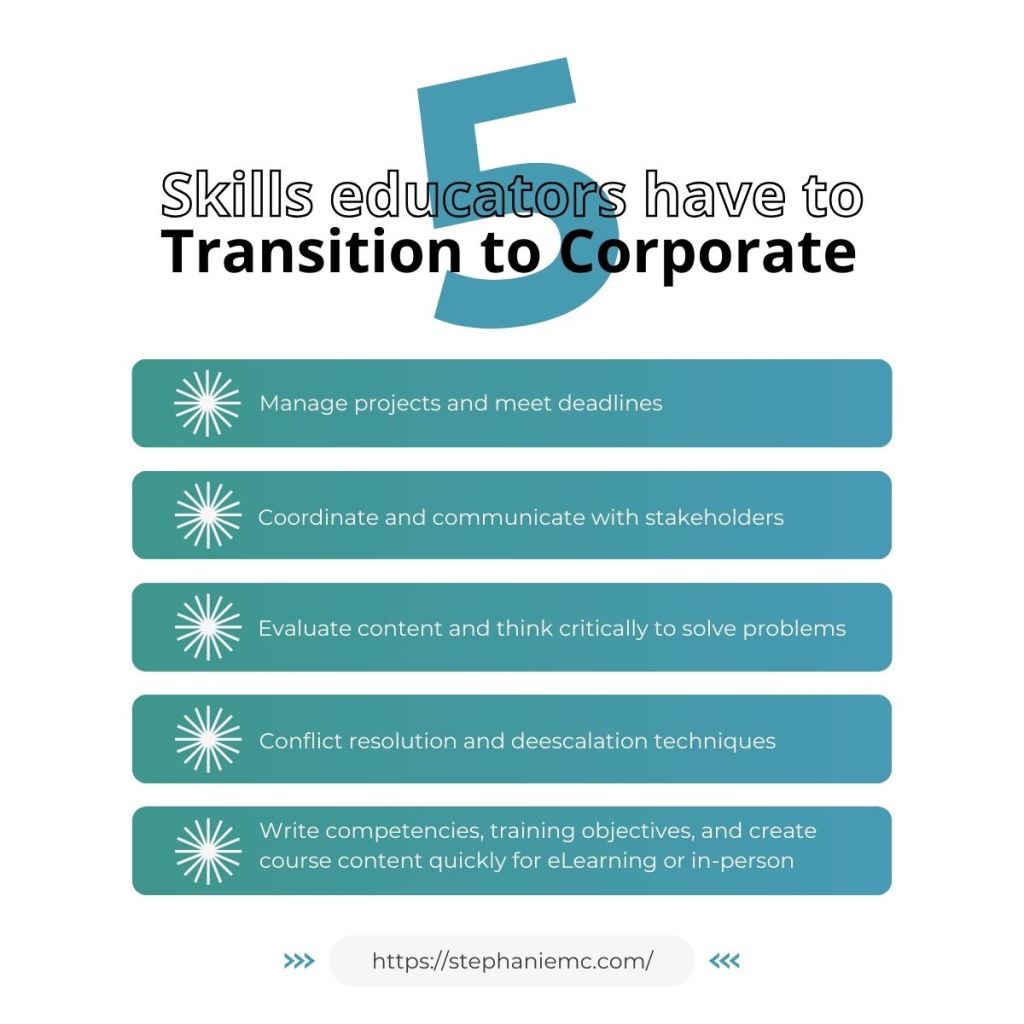
From understanding learner needs to managing complex projects, educators bring a wealth of experience in areas that directly contribute to corporate success. Their expertise in needs analysis enables them to identify skill gaps and to design tailored learning programs. Their ability to track impact data helps organizations measure progress and adjust strategies for maximum effectiveness.
Moreover, educators excel in fostering inclusive and collaborative work environments . Their background in and experience with conflict resolution, coaching, and mentoring makes them natural leaders. In a corporate setting, these qualities translate into guiding teams through challenges, driving diversity initiatives, and promoting a culture of continuous learning. Whether it’s developing hands-on training activities, writing assessments, designing eLearning, or facilitating impactful learning experiences, former teachers are uniquely positioned to shape employee development and lead meaningful change.
Despite the clear alignment between educational and corporate skills, former teachers are often overlooked in the hiring process and underpaid if hired. This disconnect can stem from misconceptions about their experience or the tendency for educators to be underestimated in non-academic environments. One key factor is the language barrier: educators often use jargon specific to their field, which doesn’t always resonate with corporate hiring managers. To bridge this gap, it’s crucial for former teachers to do their research and translate their experience into corporate terms. For example, “lesson planning” translates to “curriculum development” or “strategic learning design.” Additionally, if former teachers can pull specific examples of times they used concrete data to measure the impact of their teaching or training initiatives this can help highlight their value and ability to measure impact data. By effectively communicating their skills in the context of business needs, former educators can better connect with interviewers and prove their worth in the corporate world. Follow more for more tips!
 stephaniemc.com